

Hey there! As a supplier of 300D PE Coated Oxford Fabric, I often get asked about how to measure the water vapor transmission rate (WVTR) of this awesome material. So, I thought I'd share some insights on this topic.
First off, let's understand what water vapor transmission rate is. Simply put, WVTR is a measure of how much water vapor can pass through a material over a specific period of time and under certain conditions. For 300D PE Coated Oxford Fabric, knowing its WVTR is crucial as it helps in applications where moisture management is key, like outdoor gear, tents, and some types of clothing.
There are a few common methods to measure the WVTR of 300D PE Coated Oxford Fabric.
The Cup Method
This is one of the oldest and most straightforward ways. You'll need a special cup, desiccant (usually silica gel), and a weighing scale. Here's how it works:
- Cut a sample of the 300D PE Coated Oxford Fabric. Make sure it's big enough to cover the opening of the cup. You can get more info about 300D PE Coated Oxford Fabric on our website.
- Put the desiccant in the cup. The desiccant will absorb the water vapor that passes through the fabric.
- Seal the fabric tightly over the cup opening. You want to make sure there are no gaps or leaks around the edges.
- Weigh the whole setup (cup, desiccant, and fabric) and record the initial weight.
- Place the cup in a controlled environment. The temperature and humidity are usually set according to the standard you're following. A common condition is 38°C and 90% relative humidity.
- Leave the setup in the environment for a specific period of time, like 24 hours or more.
- Take the cup out and weigh it again. The difference in weight between the initial and final measurements gives you the amount of water vapor that passed through the fabric during that time.
To calculate the WVTR, you use a simple formula:
[ WVTR=\frac{W}{A\times t}]
Where:
- (W) is the weight change of the desiccant (in grams)
- (A) is the area of the fabric exposed to the water vapor (in square meters)
- (t) is the time the fabric was exposed (in days)
The cup method has its pros and cons. It's relatively simple and inexpensive, but it can be a bit slow, and results can vary depending on the sealing quality and the environment conditions.
The Permeation Cell Method
This method is more high - tech compared to the cup method. It uses a permeation cell, which is basically a device that allows for a more precise control of the test conditions.

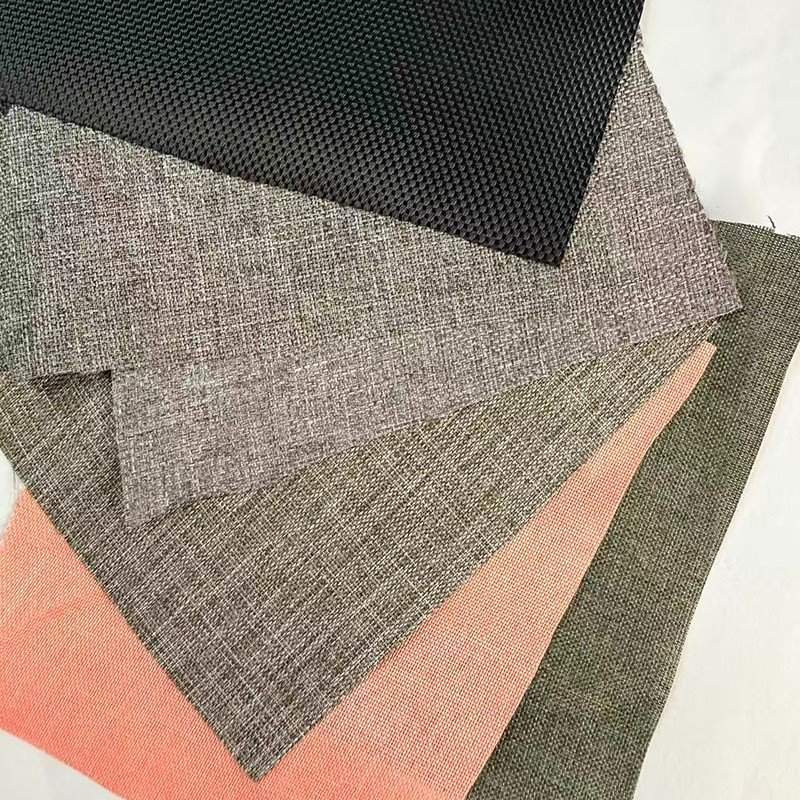
- You cut a small circular sample of the 300D PE Coated Oxford Fabric.
- Mount the sample between the two compartments of the permeation cell. One side is usually kept at a high humidity level, and the other side at a low humidity level.
- The cell is connected to sensors that measure the water vapor concentration on both sides. As water vapor passes through the fabric, the sensors detect the change in concentration.
- The data is then collected and analyzed by a computer. The computer calculates the WVTR based on the change in concentration over time.
The permeation cell method is faster and more accurate than the cup method. It can provide real - time data and is less affected by external factors. However, it's also more expensive, and you need specialized equipment and trained operators.
Importance of Accurate WVTR Measurement
Knowing the accurate WVTR of 300D PE Coated Oxford Fabric is super important for both the manufacturer and the user.
For us as suppliers, accurate WVTR measurement helps us ensure the quality and consistency of our products. Different batches of fabric might have slightly different WVTR, and by measuring it, we can make sure that each roll of fabric meets the required standards. This also helps in product development. We can use the WVTR data to improve our coating process or choose better raw materials.
For users, it's all about performance. If you're making outdoor tents, you want a fabric with a low WVTR to keep the inside dry. On the other hand, if you're making sports clothing, you might want a fabric with a higher WVTR to allow sweat to escape.
Other Related Oxford Fabrics
We also offer other types of Oxford fabrics, such as Pvc Coated Oxford Fabric, Pa Coated Fabric, 300D Cationic Oxford Fabric, and Pu Coated Waterproof Fabric. Each of these fabrics has its own unique properties and WVTR characteristics.
If you're interested in learning more about how to measure the WVTR of these fabrics, the general methods are similar, but the results might vary due to the different coatings and materials used.
Conclusion
Measuring the water vapor transmission rate of 300D PE Coated Oxford Fabric is an important step in ensuring its quality and performance. Whether you choose the simple cup method or the more advanced permeation cell method, it's all about getting accurate data.
If you're in the market for high - quality 300D PE Coated Oxford Fabric or any of our other Oxford fabrics, don't hesitate to reach out. We're here to help you find the right material for your specific needs. Let's start a conversation and see how we can work together!
References
- ASTM E96 - Standard Test Methods for Water Vapor Transmission of Materials
- ISO 15106 - Plastics -- Film and sheeting -- Determination of water vapour transmission rate